Social Interaction – Helping Children Build Friendships and Confidence for School
⏱️ 2 min read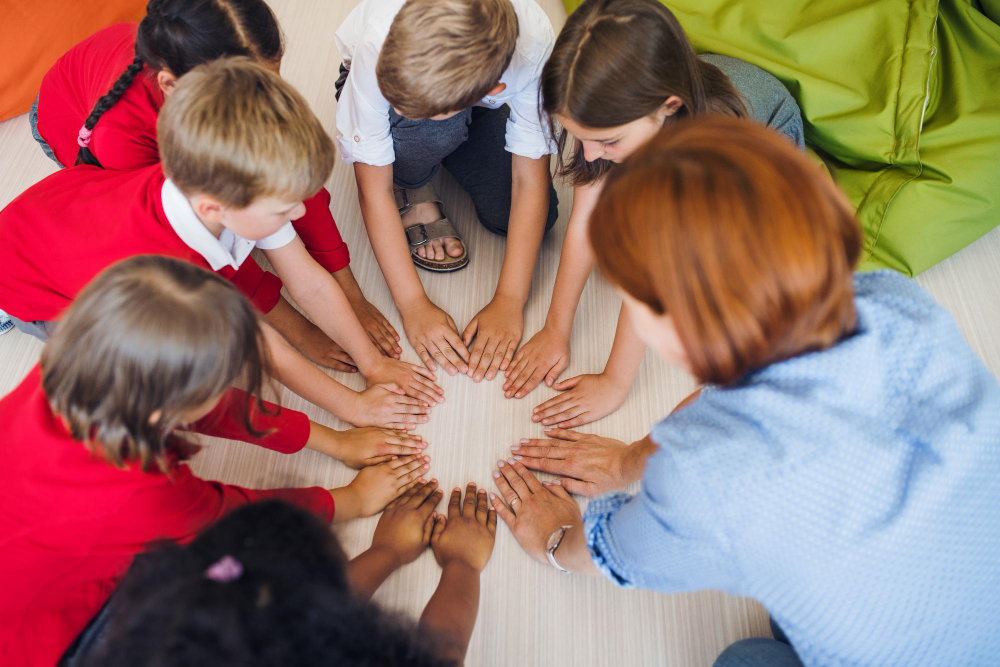
What Are Social Interaction Skills?
Social interaction skills are a child’s ability to connect, communicate, and cooperate with peers and adults. These skills form the backbone of positive experiences in school and playgrounds.
Children with strong social interaction skills can:
- Make friends easily
- Share materials and take turns
- Communicate needs appropriately
- Participate in group activities
Children who struggle socially may feel isolated, frustrated, or withdrawn, which can affect confidence, learning, and overall school success.
Why Social Interaction Matters for School Readiness
In school, children are expected to:
- Play and work with peers
- Follow group instructions
- Take turns and share materials
- Communicate effectively with teachers
Children who lack social interaction skills may:
- Avoid group play or collaborative activities
- Interrupt others or struggle to take turns
- Have conflicts with peers
- Appear shy or anxious in social settings
These challenges are common and do not indicate a lack of intelligence. Instead, they reflect a need for guided practice and support.
Signs Your Child May Need Support with Social Interaction
- Prefers to play alone most of the time
- Difficulty joining group activities
- Interrupts peers or doesn’t wait for turns
- Difficulty communicating wants or needs
- Shows frustration during cooperative play
Early intervention helps children develop confidence and positive social behaviors, making the school transition smoother.
How Parents Can Support Social Interaction at Home
Parents can foster social skills through:
- Playdates and group play: Encourage safe, supervised interactions
- Role-playing games: Practice greetings, sharing, and taking turns
- Positive reinforcement: Praise cooperation, patience, and sharing
- Modeling social behavior: Demonstrate polite communication and empathy
Structured, guided social practice helps children gradually learn peer interaction skills.
How Seedlings Supports Social Interaction
At Seedlings, social interaction is a key part of our School Readiness Program:
- Individual assessment to identify strengths and challenges
- Play-based group activities that encourage cooperation
- Therapy-led exercises for communication, sharing, and turn-taking
- Parent guidance to practice social skills at home
Our goal is to help children develop confidence, friendship skills, and adaptability, preparing them for a positive school experience.
Final Thoughts
Social interaction is essential for a child’s academic and emotional success. Supporting this skill early ensures children:
- Make friends and participate in group learning
- Handle classroom dynamics confidently
- Build independence and self-esteem
🌱 If your child struggles with peer interactions or group participation, Seedlings’ School Readiness Program can help them develop social confidence and school-ready skills. Contact us today to schedule an assessment.